
Why Did Ray-Ban Aviators Begin as Pilot Gear?
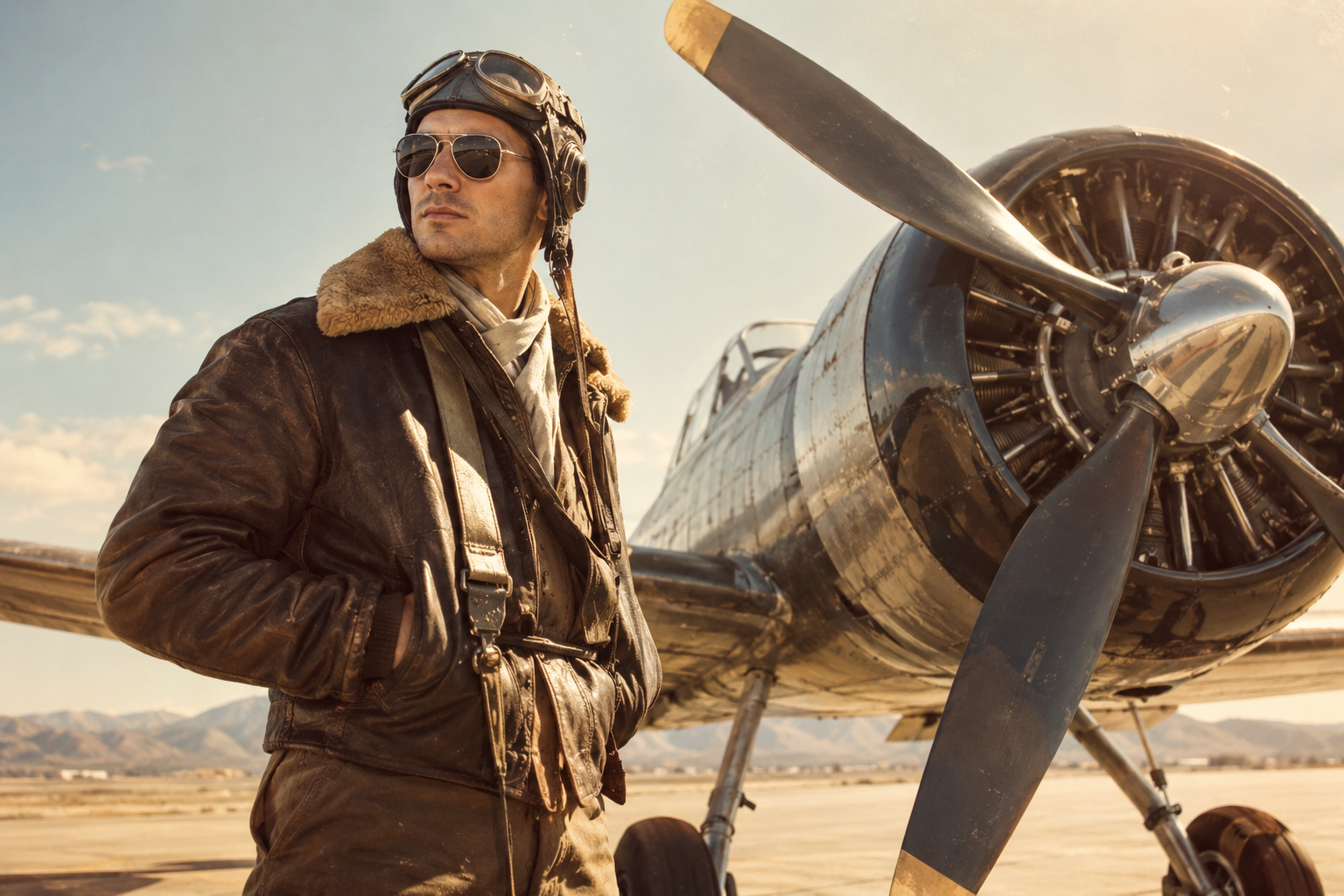
Spot metal-framed teardrop sunglasses in an old film or photograph and the words “pilot glasses” come to mind first. These days they are seen more often on the street than on the runway, so why does the pilot's name still follow this shape around?
Because the records of Bausch & Lomb, the maker of Ray-Ban, put its beginning at goggles for military pilots, and because 1930s advertising put pilots front and centre.
Lay the records side by side and the picture is a little more complicated than the familiar story. This article is not a product introduction but a walk through history, following company timelines, museums and local history sources to see how the name began.
Why was glare in the sky a problem?
On the ground, buildings and trees give shade, but in a cockpit above the clouds there is little to block the sun. In the abstract of a 1989 paper in the journal Health Physics, D. H. Brennan of the Royal Air Force Institute of Aviation Medicine named direct glare and veiling glare, which clouds the view, as major causes of reduced vision in flight. The reason is that flying a fast aircraft requires quick decisions based on information taken in through the eyes.
That was written long after the 1930s, but it shows well why glare is no minor matter for pilots. Another story about pilots' eyes can be found in our article on fighter pilots and contact lenses.
The word in the timeline was goggles
The 1936 entry in Bausch & Lomb's official timeline has a short sentence saying that Ray-Ban goggles for military pilots were first produced. It is one line in the long timeline of a company that began as a small optical shop in Rochester, New York, in 1853.
The word that stands out is goggles, not sunglasses. A list of Bausch & Lomb trade catalogues compiled by Smithsonian Libraries also shows an advertising sample called “Ray-Ban Anti-Glare Sun Goggles”. As the name says, these are goggles for sunlight that fight glare. The words sit closer to equipment than to today's fashion accessory.
However, this list groups together material from a long period, so there is no telling which year that name belongs to. Nor can it be stated with certainty that it was the first product's official name.

The advertising that said “developed for aviators”
The Smithsonian's National Museum of American History has a collection record titled “Ray-Ban Sunlenses”. According to its description, Bausch & Lomb launched Ray-Ban premium sunglasses and spectacles in 1936, and advertising promoted them as “optically correct” and “developed for Army and Navy aviators”. As its evidence it cites a Bausch & Lomb advertisement on page 4 of The Spur, no. 62, dated 1 May 1938.
This sentence needs careful reading. The museum has not proved how the product was developed; it has recorded the fact that the company advertised it that way. Advertising copy is the company's claim, and it differs in kind from documents showing what was actually supplied to the military and in what quantity.
The order of events is also worth thinking about. It is often said that equipment supplied to the military later moved into general sale, but in 1938 pilots were already appearing in advertising for premium sunglasses. Pilots were, in effect, both the people using the product and a way of describing it.
Why do sources differ on the start year?
The question of when it began has several answers. The Bausch & Lomb timeline and the Smithsonian say 1936. The fiscal 2011 annual report filed with the US Securities and Exchange Commission by Luxottica, which acquired the brand in 1999, says it first appeared with the Aviator model in 1937. A 1993 trademark judgment (Bausch & Lomb v. Nevitt Sales) puts it broadly at the late 1930s onwards.
It may not be a matter of working out which one is wrong. The timeline is talking about goggles for military pilots, the museum about premium sunglasses and spectacles, and the report about the Aviator model, so these sentences do not point to the same thing. The more famous an object, the more the question “when?” brings with it the question “by what measure?”
More than one company spoke of pilot glasses
An article by American Optical, the US eyewear company, explains that it launched the D-1 in 1935 in cooperation with the US military, and that this was the first pair of sunglasses designed specifically for pilots. It also mentions teardrop lenses, intended to cover a wide area and reduce glare from the sides.
That is one year earlier than the Bausch & Lomb timeline. But this too is a company presenting its own history, so setting the two companies' sentences side by side does not settle who was “first”. What can be read from them is that in mid-1930s America, glare for pilots was not the concern of just one company.

Scenes left by the war
The Winter 2004 issue of Rochester History, published by Rochester Public Library, states that during the Second World War the whole of Bausch & Lomb's Ray-Ban sunglasses output went to Army and Navy procurement offices. The explanation given is that they were very popular with pilots flying at high altitude.
The same article has one more scene: General Douglas MacArthur's Ray-Bans broke, and a new pair was sent to him by express. The writer adds the word “reportedly”, and the notes point to a Bausch & Lomb booklet and a local newspaper from 1945. It is an entertaining anecdote, but best read with only that much weight.
The International Directory of Company Histories also mentions use by US Army Air Corps pilots and by MacArthur in its account of the war years. Bausch & Lomb later disclosed that in June 1999 it passed its sunglasses business, including Ray-Ban, to Luxottica.
From the runway to the street
That Bausch & Lomb put pilots forward under the Ray-Ban name in the mid-to-late 1930s is shown by company and museum records together. The statement that wartime output went to military procurement remains in the Rochester record. Behind the pilot's name that still follows this shape lay both its use as equipment and the words of advertising.
The images in this article are generated images to help convey the atmosphere of the time, not real archival photographs.
Next time you see sunglasses of this shape, take a look at how far down the lenses go. The curve survives as fashion, but the starting point the maker describes is glare, not style.