
Why Do Photochromic Lenses Darken Less Inside a Car?
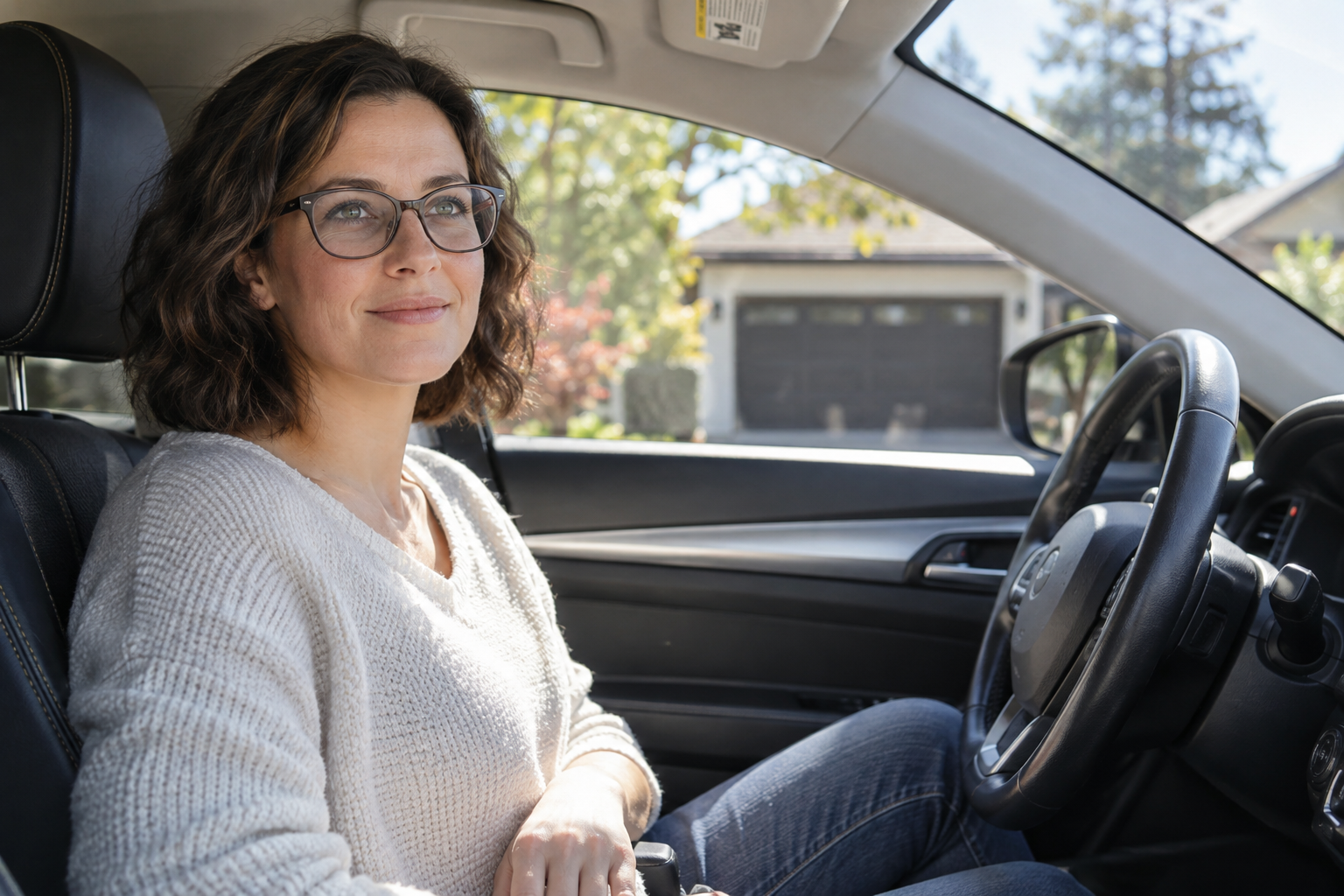
You step outside and your glasses darken. Soon afterwards, inside the car, the sunlight still looks strong but the lenses seem lighter than expected. Why did the indoor-to-outdoor demonstration look different from driving?
Many photochromic lenses respond to more than visible brightness. UV plays an important role, and a car windscreen blocks much of it. However, products do not all react in the same way: check the exact model.
The brightness you see and the light that activates a lens
Thinking of photochromics simply as “glasses that go dark in bright light” makes their behaviour inside a car puzzling. A bright environment to human eyes and the conditions that activate the material are not identical information.
Transitions' technology explanation describes conventional photochromic technology as responding to UV. Windscreens block much of that UV, so many photochromic lenses may not become sufficiently dark inside a car.
Conditions differ on either side of the windscreen even in the same sunshine. A bright-looking cabin does not mean outdoor levels of UV reach the lenses. This distinction helps explain “Why aren't they working when it is so sunny?”
“They do not change in cars” is too broad as well
That does not make all photochromic lenses useless for driving. Transitions separately describes products such as XTRActive, designed to respond to both UV and visible light and therefore activate inside a car too.
The distinction between product families matters. Do not transfer one model's characteristics to another because both are called photochromic. Check which exact model a shop's explanation concerns.
Activation in a car also does not guarantee the same darkness or speed as outdoors in every condition. Consider the lens and environment together, and check whether they match your intended use.

Temperature can change the experience
Temperature matters too. Transitions explains that lower temperatures can slow the molecular reaction, so returning from dark to clear may take longer; warmer conditions can speed clearing.
A holiday experience or a friend's experience on another day is therefore not a direct prediction of yours. A difference from last winter is not, by itself, proof of a fault.
Nor must every difference be dismissed as weather. Give the product name and specific conditions when asking for help. Describing where and how the response differed is more useful than saying only “the tint is weak.”
Questions a short demonstration may miss
A brief demonstration can show that a lens changes, but cannot represent your whole day. Moving between an office, window, car and outdoors changes which situation matters most.
If driving is the priority, ask about behaviour in a car first. If you work indoors for long periods, ask about residual indoor tint and clearing. If you spend a long time in sunshine, ask how the product compares with separate sunglasses.
These questions are about whether a model includes the functions you expect, not simply which product is a higher grade. Also check that the model explained in the shop matches the one on your order.
Photochromic and polarized are different features
Darkening and reducing reflected glare are easily confused. “Photochromic” alone does not establish that a lens is polarized.
ZEISS's sunglasses guide describes them separately: photochromic lenses change tint with conditions; polarization manages reflected light. Some products may combine them, but this must be checked model by model.
We covered polarized lenses and car displays in the preceding article. For driving eyewear, check both how dark the lenses become and whether instruments and navigation remain readable. Do these checks safely parked.

Deciding whether you need separate sunglasses
Wanting one pair for every situation is understandable. But fixing that expectation before reading the product description can turn normal differences in use into disappointment.
Transitions' professional guidance also considers UV and temperature when discussing performance. Instead of applying one demonstration or tint figure to the car, commute and office alike, ask about each important situation.
“Will one pair be enough?” means matching your day with the lens's conditions. Frequent drivers can ask about expected glare reduction; people moving repeatedly indoors and out can ask about transitions between environments.
Next time activation seems weak in a car, start with the model name and in-car guidance before assuming a fault. Alongside brightness, consider what the sunlight passed through before reaching the lenses.