
By 2050, Will Half the World Be Nearsighted?
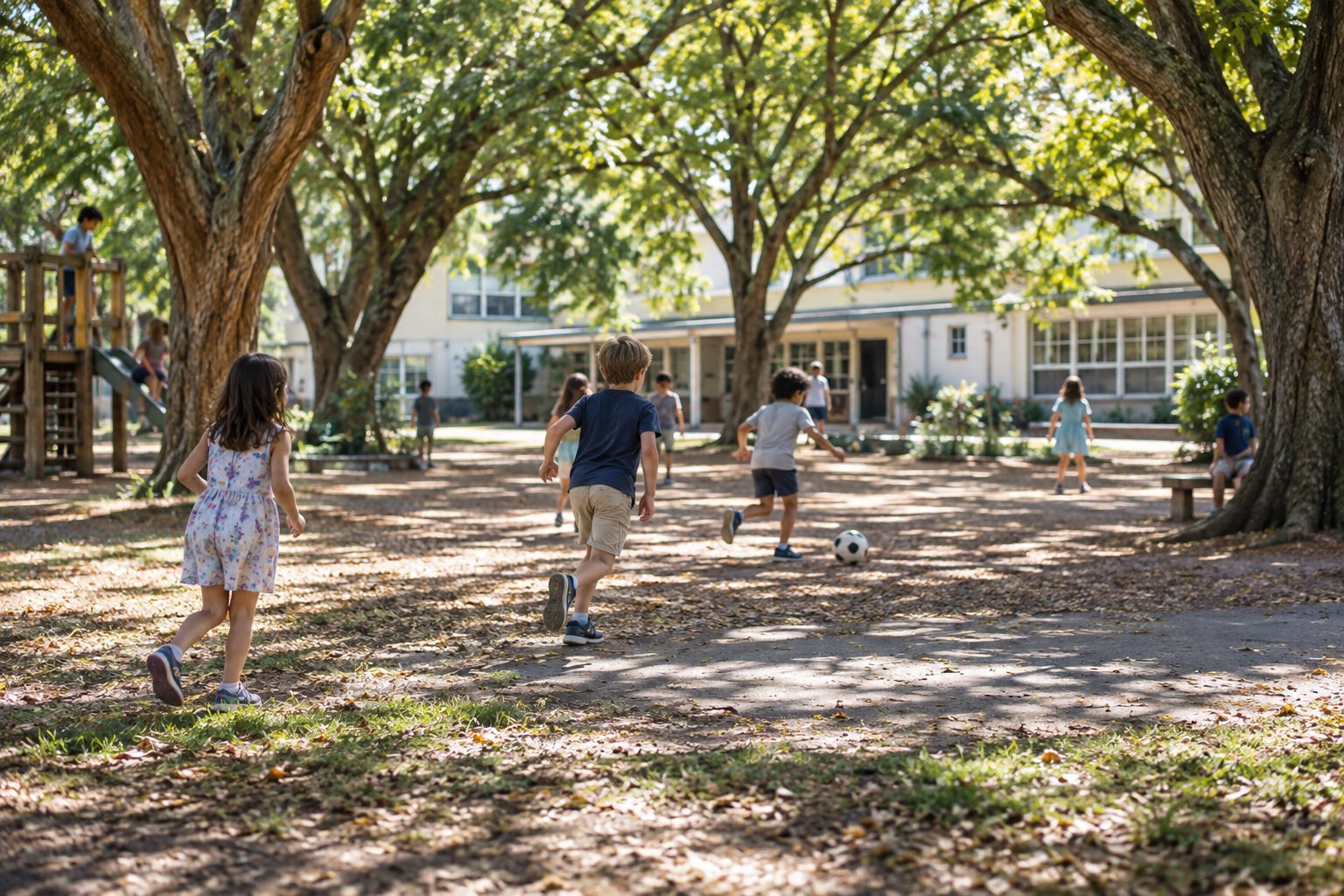
Look around a classroom and you see a lot of children in glasses. Clearly more than in their parents' generation.
It is not just an impression. Researchers believe myopia (nearsightedness) is rising quickly around the world.
In numbers
A 2016 paper by Holden and colleagues in the journal Ophthalmology pooled data from 145 studies covering 2.1 million people to estimate how many people in the world are nearsighted.
- 2000: about 1,406 million people with myopia (22.9% of the world population)
- 2050 forecast: about 4,758 million people with myopia (49.8% of the world population)
The paper expected high myopia to rise as well, from 163 million people (2.7%) in 2000 to 938 million (9.8%) in 2050. It concluded that services need to be planned now to manage and prevent the complications and vision loss of nearly 1 billion people with high myopia.
The American Academy of Ophthalmology (AAO) also says that by 2050 nearly half the people in the world will be nearsighted.
Genes alone don't explain it
You have probably heard that children of nearsighted parents are more likely to become nearsighted. Holden's team also wrote that genetic predisposition seems to play a role.
But the paper said genes cannot explain changes seen over such a short period. Genes do not change much in one or two generations.
So the paper explains that the rise is widely considered to be driven mainly by environmental factors, principally lifestyle changes: less time outdoors and more near work. It also named high-pressure education from a very young age in countries such as Singapore, Korea, Taiwan and China, and excessive use of near electronic devices, as possible causes.
Trials that added time outdoors

Among the suspected causes, time outdoors is the one that has been tested in actual trials.
**Guangzhou, China (2015, JAMA)**
1,903 first graders (aged 6 to 7) at 12 primary schools were split into two groups. One group of schools added a 40-minute outdoor activity class each day. After three years, the share of children who had newly become nearsighted was:
- Group with added outdoor time: 30.4%
- Group with usual activities: 39.5%
**Taiwan schools (2018, Ophthalmology)**
693 first graders at 16 schools took part. Schools in the program encouraged children to go outside during breaks, for up to 11 hours a week outdoors. After one year, the shift toward myopia was smaller in the program group: 0.35 diopters, against 0.47 diopters in the comparison group. The effect was seen both in children who were already nearsighted and in those who were not.
The study has one more conclusion worth noting. The researchers said strong sunlight may not be necessary. They wrote that spending longer time outdoors, even in somewhat less bright places such as hallways or under trees, can also be considered.
The AAO likewise cites research that too much time indoors raises a child's risk of myopia, and that more time outdoors in natural light lowers it.
Are screens the cause?

Here we need to be careful. The AAO cites research that children who do a lot of near-focused activities, such as computer work, video games and reading, have higher rates of myopia, but it states clearly that no direct link has been proven.
So the AAO's advice says two things together: increase time outdoors, and limit screen time.
Why more myopia is a problem
Myopia itself can be corrected with glasses or lenses. The problem comes when it becomes severe. The AAO explains that people with high myopia have a higher risk of eye diseases such as retinal detachment, glaucoma and cataracts.
That is why there is now so much interest in how fast a child's myopia progresses. The AAO describes low-dose atropine eye drops, special soft lenses designed to slow myopia progression, and orthokeratology lenses worn overnight. Orthokeratology is covered in the next article.
In short
- Myopia is rising around the world, and one forecast says nearly half of humanity will be nearsighted by 2050.
- Genes alone cannot explain the speed; changes in how we live are named as the main cause.
- More time outdoors for children is an approach whose effect has been shown in trials.
- Which method of slowing myopia suits a child differs from child to child, so discuss it with an eye doctor.
Why your glasses and lens prescriptions differ is explained in Why Are Your Glasses and Contact-Lens Prescriptions Different If Your Eyes Are the Same?
References
- Holden BA et al., Global Prevalence of Myopia and High Myopia and Temporal Trends from 2000 through 2050, Ophthalmology 2016;123:1036-1042
- He M et al., Effect of Time Spent Outdoors at School on the Development of Myopia Among Children in China, JAMA 2015
- Wu PC et al., Myopia Prevention and Outdoor Light Intensity in a School-based Cluster Randomized Trial, Ophthalmology 2018;125:1239-1250
- American Academy of Ophthalmology (AAO), Nearsightedness: What Is Myopia?
- American Academy of Ophthalmology (AAO), Myopia Control in Children
This article is general information and does not replace diagnosis or treatment. Have changes in a child's vision checked by an eye care professional.