
Do You Still Need Protective Eyewear If You Wear Contacts for Sport?
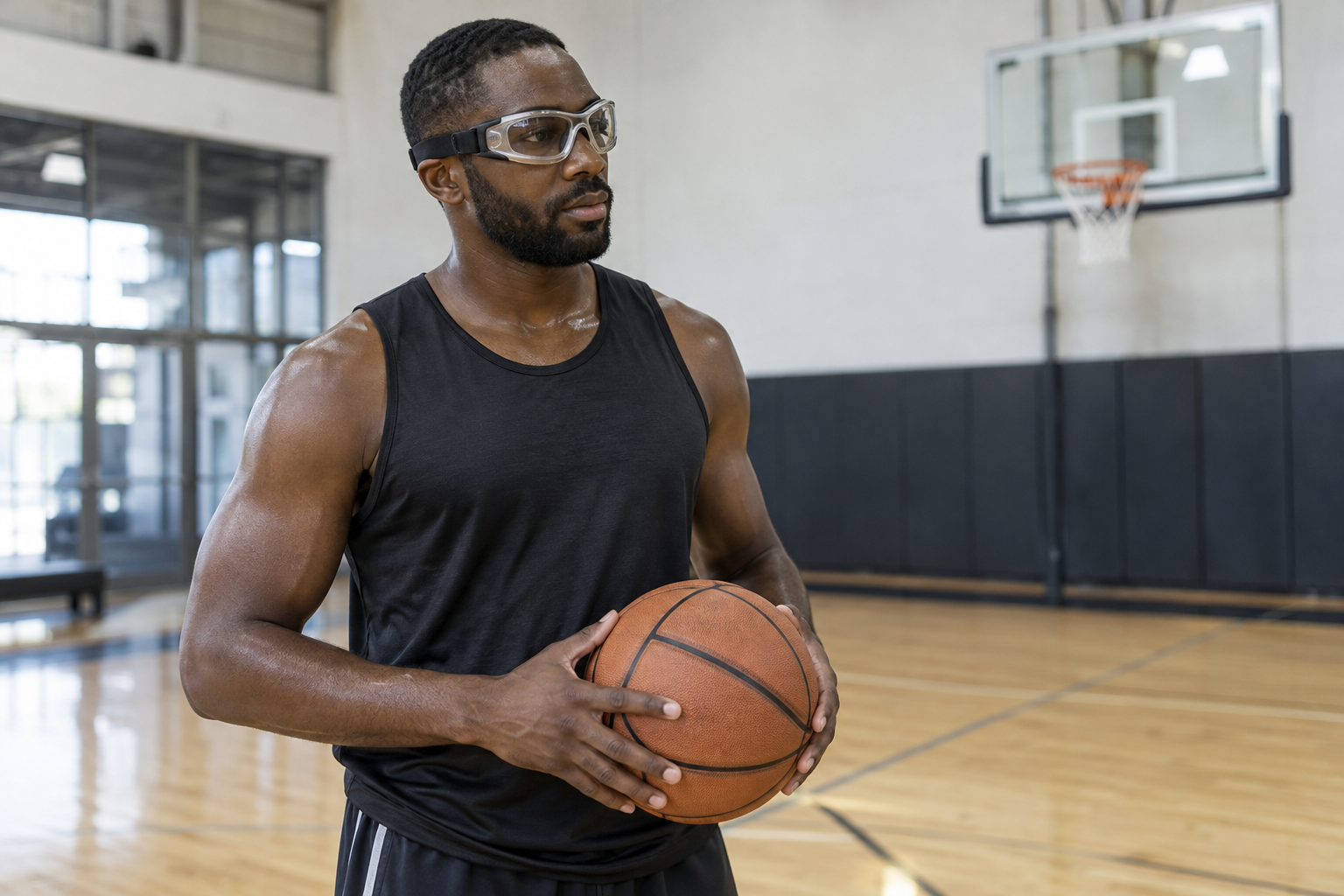
Swapping glasses for contacts before stepping onto a court can feel liberating: no slipping frame and nothing in front of your face. But will the lens protect you if a ball or racket comes towards your eye?
Correcting vision and protecting eyes from impact are separate jobs. Contacts may help you see clearly, but they do not create an impact barrier. Think about appropriate protective equipment alongside your vision correction method.
We covered exercising with contacts previously. This time, the focus is on identifying protection suited to the sport rather than care relating to water or sweat.
Everyday glasses are not enough by themselves
The US National Eye Institute's sports guide advises against treating ordinary glasses, contacts or sunglasses as equipment to prevent sports eye injuries. Choose protection designed for sport and check that it fits comfortably.
Your everyday glasses correct vision; sunglasses address sunlight and glare according to their features. Both are useful, but neither fact establishes suitability for a particular ball or equipment impact.
Looking robust in a product photo differs from being designed for that sport. Check the intended use and protective requirements rather than relying on “sporty” styling.
Is the word “polycarbonate” enough?
Polycarbonate appears often in sports goggle descriptions. The NEI's protective eyewear guide gives sports goggles with polycarbonate lenses as examples for basketball, football and squash or racquetball.
The same material does not make every finished product suitable for the same use. Consider the frame holding the lenses, the way it is secured to the face and the conditions for which it was evaluated. One component's name is not the performance of the whole assembly.
If the product page does not name the sport, ask. Providing the actual sport, age and need for prescription lenses gets a more specific answer than “Can I wear these for exercise?”

Different sports call for different protection
Basketball, baseball and ice hockey have different risks and equipment. Do not assume goggles appropriate for one will suit the others.
The NEI distinguishes activities, describing helmets with face guards for baseball batting and helmet-mounted face protection for ice hockey. Thinking of eye protection as a single glasses product can hide these differences.
Check the team or facility's current requirements too. Rules can differ by country, organization and age. An example in a foreign guide is not necessarily the rule for your event. Before buying, confirm that the equipment is accepted where you will use it.
What if you need prescription correction?
There are ways to combine vision correction and protection. The American Academy of Pediatrics' guidance discusses prescription goggles where appropriate and protective eyewear worn over contacts.
This does not mean every product and prescription combination is possible. Ask the maker whether the goggles can accommodate your prescription and whether replacement lenses preserve the product's intended protective use.
Putting any goggles over everyday glasses is not automatically an answer either. Check whether they are designed to be worn together and whether they collide or press on the face. Fit the combination you will actually use.
Check the fit before a match
As with trying new shoes before an important match, test protective eyewear with gentle versions of the movements you will make. Does it move when you bend or turn? Is the strap too tight? Does a helmet push it out of position?
Ask about fogging with sweat or temperature changes in your environment. If your view becomes obstructed, stop safely and check the equipment instead of forcing yourself to continue. Do not modify lenses or frames yourself to improve retention.
Before buying, check spare parts and care instructions too. Follow the manufacturer's guidance on inspection after a hard impact or a major scratch. Looking intact is not enough to decide continued use.

Children need a real fitting too
Help a child explain where the eyewear feels uncomfortable, and check the fit together. Even a good product leaves a practical problem if the child keeps taking it off.
The American Academy of Pediatrics advises discussing sport-specific risks with the treating clinician for individual circumstances such as reduced vision in one eye or previous eye surgery. Standard product comparisons alone should not decide participation or equipment in those cases.
Contacts and protective eyewear do not compete. One answers how to see clearly; the other answers how to protect the eyes. When packing your next sports bag, check that both questions have been addressed.