
The Dirtiest Thing Was Not the Lens. It Was the Case
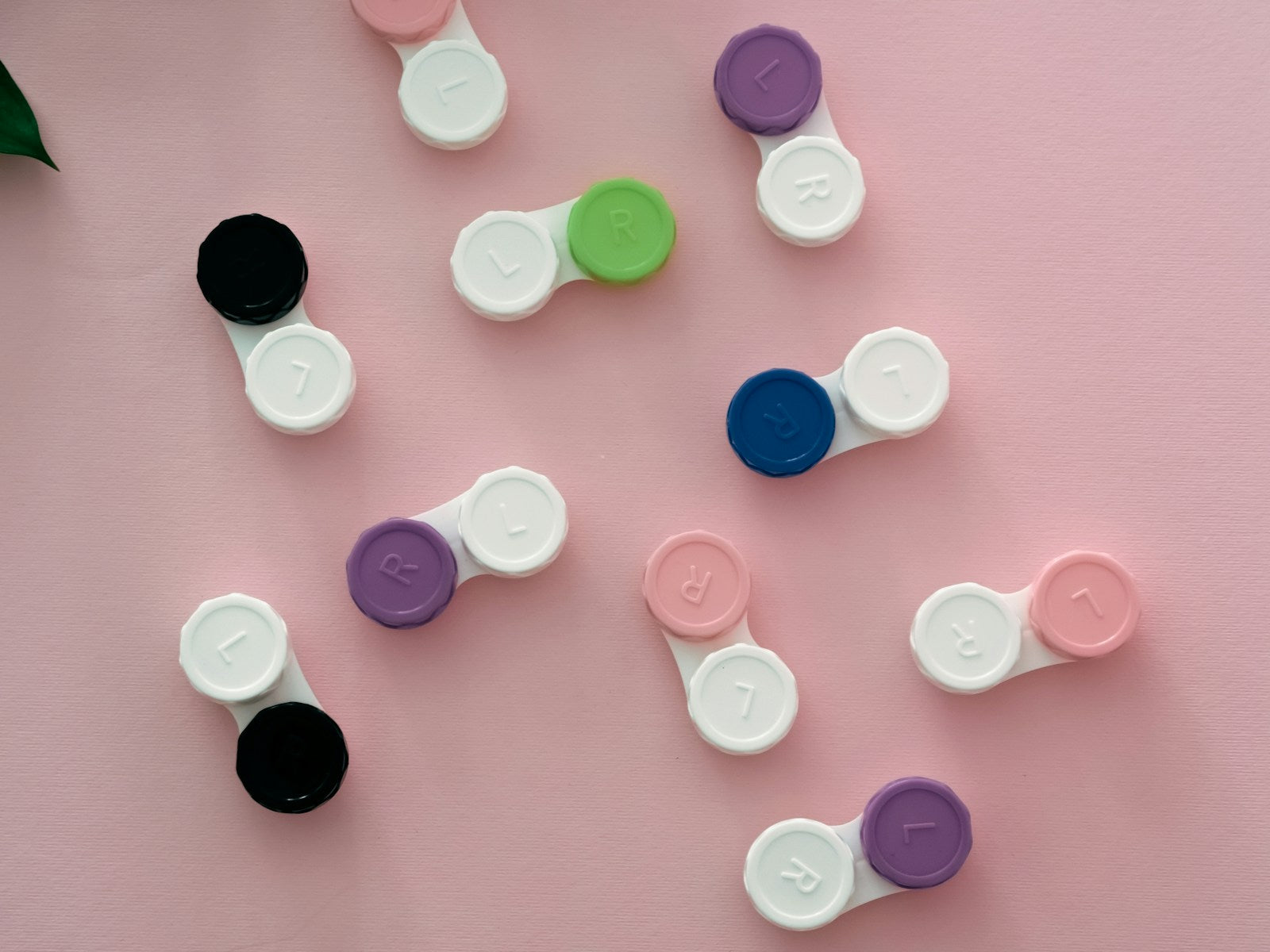
Lenses touch the eye directly, so we handle them with care. But the plastic case where the lenses spend half of every day stays on the bathroom shelf. The lid goes back on before yesterday's drops have dried, fresh solution goes in, and it is used again.
In CDC surveys, many wearers said they did not keep to the replacement schedule for their case. Practitioners believed they explained it often; the proportion of patients who remembered hearing it was much lower.
A lens case is not packaging. It is a care tool used over and over.
What stays behind inside the case
When you take a lens out, proteins and lipids from your tears and material from your hands travel with it. Even after the solution is poured away, some of it can remain on the walls and in the corners. If microorganisms attach to the surface and form a film, tipping out the liquid may not remove it.
Looking clean to the eye is no proof of disinfection. Fine scratches, the screw threads and the inside of the caps are harder still to check. And filling an old case with fresh solution does not make it a new case.
The risk of water exposure is covered in Why Can You Get Caught in the Rain but Not Shower in Contact Lenses?.
Wouldn't rinsing with tap water be cleaner?
For a cup or a plate, rinsing under the tap is the natural thing to do. A lens case is different.
Tap water is managed to drinking standards, but it is not sterile. Acanthamoeba, which can be present in water, causes a rare but serious corneal infection in lens wearers.
The CDC advises against using water on lenses and lens cases. That includes washing the case in the shower, or rinsing it with water and pouring solution straight in. Keeping it away from splash zones in the bathroom, and away from the toilet, is a practical choice too.
Four steps, every day
After you have put your lenses in for the day, tip out all the remaining solution.
First, add fresh multi-purpose solution and rub the inside of the case with clean fingers.
Second, rinse it again with fresh solution.
Third, shake out the remaining liquid.
Fourth, leave it upside down with the caps off on a clean tissue to dry.
If the product or your eye care professional says otherwise, follow those directions. Hydrogen peroxide systems need their own case and neutralising parts, so they are not interchangeable with ordinary cases.
When to replace the case
The CDC advises replacing it at least every three months. If the product or your practitioner recommends a shorter interval, follow that.
Cracks, discolouration, a rough surface or a cap that no longer closes properly mean replacement even if time remains. If you cannot remember when you last changed it, set a repeating reminder on your phone, or tie it to the change of season.
When travelling, a damp case closed into a pouch will not dry on the way. Pack a completely dry case and sealed travel-size solution. Do not decant from a large bottle into a small container, and never use a hotel glass as a temporary case.
If you have forgotten the case altogether, the safe choice is to discard a disposable lens and wear glasses.
A lens case is cheap and unremarkable, so it is easy to keep using. But it remains the place your lenses live every day.
Lens care includes emptying the case, drying it and replacing it on time.
A new case needs care from day one
Write down the date you opened the new case, and check that it suits the solution you use. Rotating several cases makes it easy to lose track of each one's age, so it is simpler to keep one case in use and one completely dry spare.
If the solution looks cloudy, smells odd, or the case surface feels slippery, replace the case and the solution rather than washing and carrying on. And when an eye is red or painful, swapping to a new case and putting the lens straight back in is not the answer. Have the symptoms checked first.
How the solution types differ is set out in Why Is Contact-Lens Solution More Than Salt Water?.
References
- CDC, Cleaning, Disinfecting and Storing Contact Lenses
- CDC MMWR, Contact Lens Health Behaviors
- CDC MMWR, Acanthamoeba Keratitis Cases
Follow the product's directions and your eye care professional first.